 Hover to view full image
TA-012 · available
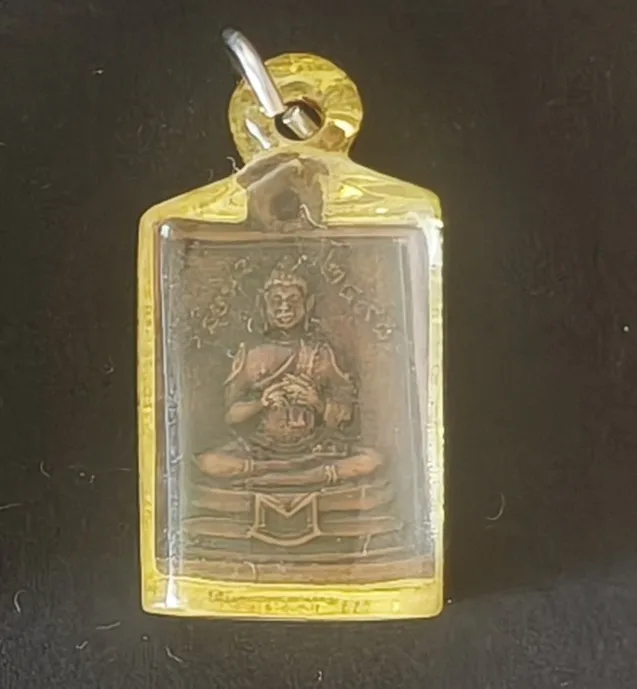
Rian by Luang Phor Pina
Rian Luang Phor Pina refers to a Thai Buddhist medallion associated with Luang Phor Pina of Wat Sanam Nuea, Phetchaburi Province. In Thai amulet terminology, Rian (เหรียญ) generally refers to a flat, usually round or oval sacred medallion bearing an image of a revered monk, Buddha image, deity, temple, or other religious subject.
Luang Phor Pina was a respected Buddhist monk whose religious legacy is remembered through the sacred objects and amulets associated with his temple and devotional tradition. His medallions are collected by devotees who value their connection with the monk and by collectors interested in the history of Thai Buddhist amulets.
Rian amulets can be produced for different occasions, including temple events, commemorations, anniversaries, religious ceremonies and other significant occasions. Consequently, there is no single production year or material that applies to every Rian associated with Luang Phor Pina.
Different editions may vary in design, inscriptions, dimensions, metal composition, finishes and production quantities. Some medallions may feature a portrait of Luang Phor Pina, while others may incorporate Buddhist imagery, temple symbols, sacred inscriptions or other devotional elements.
Depending on the particular issue, materials may include copper and other sacred metal alloys. Some productions may also have different material variants or finishes. The exact material should therefore be recorded according to the specific edition being catalogued.
In Thai Buddhist devotional culture, a monk's medallion is traditionally regarded as a sacred reminder of the monk's teachings, Buddhist practice and spiritual qualities. Devotees may associate Luang Phor Pina's amulets with traditional qualities such as protection, safety, spiritual strength, good fortune and auspicious blessings.
These traditional associations are matters of religious faith and cultural practice rather than scientifically established supernatural effects.
From a collector's perspective, identifying a particular Rian by Luang Phor Pina requires more information than the monk's portrait alone. Important identification factors may include the exact production year, temple, occasion, design, mold or block, inscriptions, dimensions, metal composition, surface characteristics, known variations, provenance and condition.
Because Luang Phor Pina medallions can exist in different editions, collectors should avoid assigning a particular year or material without supporting evidence. A reliable reference should ideally be used to match the design and physical characteristics of the individual medallion to its documented issue.
The distinction between an early original production, later temple issue, commemorative edition and modern reproduction is also important. An amulet's age and authenticity should not be determined solely by surface appearance or patina.
For collectors and devotees, the significance of a Rian by Luang Phor Pina lies in its combination of religious devotion, historical association, craftsmanship and connection with the monk's legacy. Each individual edition can provide a different perspective on the development of his amulet tradition.
Today, Rian Luang Phor Pina remains an interesting part of Thai Buddhist amulet collecting. Its connection with Wat Sanam Nuea and Luang Phor Pina gives the medallion both devotional meaning and historical collecting interest.
IMPORTANT PAYMENT NOTICE
By proceeding with payment, you acknowledge that your payment is final and non-refundable, except where a refund is expressly approved by us or required by applicable law.
Please review your offer, the Item details, rental conditions, applicable fees, and Terms & Conditions carefully before making payment.
By completing payment, you confirm that you have read and accepted our Terms & Conditions.
- Temple
- Wat Sanam Nuea
- Monk
- Luang Phor Pina
- Material
- Sacred metal, including copper and other metal alloys depending on the edition